


Main conclusion
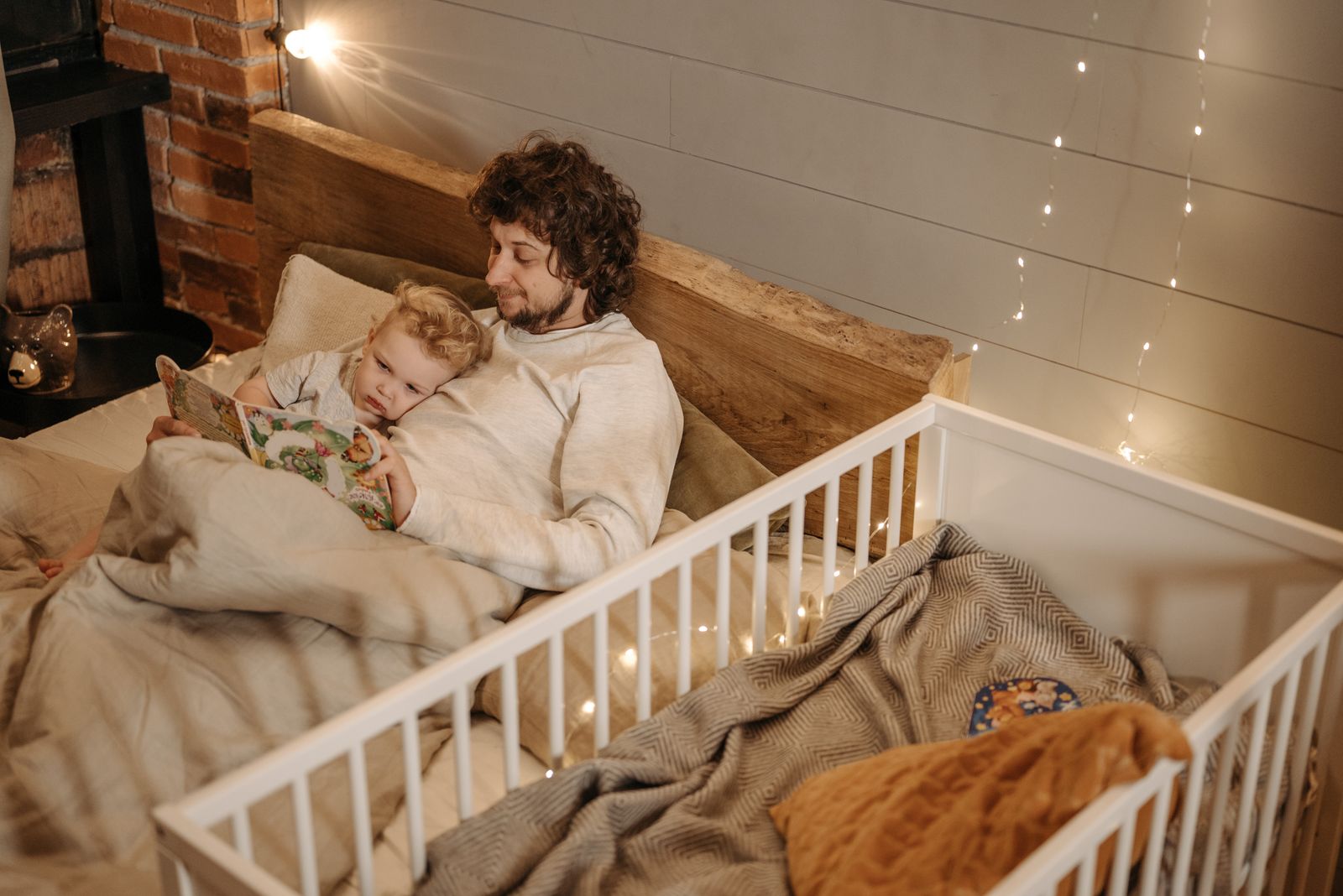
Gentle music and a familiar bedtime story will not force a child to sleep, but the research suggests they genuinely help a child settle. Calm, repetitive music has been shown to lower arousal in young children (Bainbridge et al., 2021), and a predictable bedtime routine that includes quiet activities like reading is linked with easier, faster sleep (Mindell and Williamson, 2018). Used together and consistently, they are a gentle, screen-free way to smooth the path to sleep.
The question parents are really asking
Most of us are not asking whether music and stories are nice. We know they are. We are asking something more practical at the end of a long day. Will this actually help my child settle and drift off, or is it just a pleasant habit? It is a fair question, and the honest answer is that these tools work by calming the body and making bedtime predictable, not by acting like an off switch.
What we mean by the key terms
| Term | What it means here |
|---|---|
| Calming music | Soft, slow, repetitive sound, such as a lullaby or a gentle tune, rather than lively or loud music. |
| Bedtime routine | The same small set of quiet activities done in the same order most nights before lights out. |
| Arousal | How alert or wound up the body is. Winding down means lowering arousal so sleep can come. |
What the research suggests
Three findings, each from named studies, help explain why a musical bedtime ritual works.
1. Gentle music appears to calm young children's bodies. In a study of infants, researchers measured signs like heart rate while babies listened to soft lullabies. The infants physically relaxed to the lullabies, even ones from unfamiliar cultures, suggesting that calm, lullaby-like sound has a soothing effect that does not depend on knowing the song (Bainbridge and colleagues, 2021).
2. Soft music can help children reach calm and sleep states. In a hospital study across several neonatal units, parent-preferred lullabies and gentle live sounds helped infants move more easily into quiet, alert, and sleep states (Loewy and colleagues, 2013). While that study looked at very young infants, it points to the same idea: calm sound supports the shift toward sleep.
3. A predictable bedtime routine helps children fall asleep. A large review of the evidence concluded that a consistent nightly routine, made of quiet activities such as reading a book, is linked with children falling asleep faster and waking less, with the benefit growing the more consistently the routine is kept (Mindell and Williamson, 2018). A story and a song are exactly the kind of calm, repeatable steps such a routine is built from.
4. Mainstream medical guidance agrees. Mayo Clinic lists playing soothing bedtime music and reading stories among the steps of a calming bedtime routine for preschoolers, and recommends turning screens off about an hour before bed (Mayo Clinic). It is not a promise of instant sleep, but it puts music and stories squarely inside trusted, everyday sleep advice.
Why the combination works
A story and a song do two different jobs. Calm music lowers the body's arousal, helping a child feel physically settled. A familiar story adds predictability and closeness, which is emotionally reassuring. Put them into the same order every night and you get a signal your child's body learns to recognize.
What parents can take from this
- Keep the music soft and slow. A lullaby pace matters more than the particular song.
- Choose familiar over new at bedtime. Knowing what comes next is calming, not boring.
- Do it in the same order most nights. Consistency is where most of the benefit comes from.
- Let it be short. Ten quiet minutes done nightly beats a long ritual you cannot always keep.
What we still do not know
It is worth being honest about the limits. Much of the strongest music and sleep research has been done with infants, not older toddlers and preschoolers, so we are reasoning partly from younger children. No study shows that any single song, instrument, or story reliably sends a child to sleep, and none can, because sleep depends on many things, from age to temperament to the day a child has had. What the evidence supports is gentler, more reliable settling over time, not an instant result on any given night.
What this means for a bedtime instrument
If calm, self-made music can be part of the wind-down, a soft instrument a child can play slowly fits naturally. A steel tongue drum has a gentle, in-tune sound, and with a numbered layout a young child can play a simple lullaby by following numbers, with no wrong notes to jar the mood. That turns music from something a child only hears into a quiet ritual they take part in. Our Dylan's Dream Drum goes a step further by pairing that calming sound with a bedtime story, so the same object carries both halves of the ritual, the song and the story, in one gentle bedtime tradition.
In summary
| The idea | How strong the evidence is | What it really means |
|---|---|---|
| Gentle music calms young children | Moderate | Soft, lullaby-like sound lowers arousal and helps a child feel settled. |
| Music helps children reach sleep states | Moderate (mostly infant studies) | Calm sound supports the shift toward sleep, though most evidence is in infants. |
| A predictable bedtime routine helps sleep | Strong | Consistent quiet routines, including reading, are linked with easier, faster sleep. |
| A specific song or instrument sends a child to sleep | Not established | Nothing works as an off switch. These tools help settling over time, not instantly. |
FAQ
Does music actually help a child fall asleep?
It appears to help them settle. Research shows that soft, slow music lowers arousal in young children and supports the move toward sleep. It is a calming aid within a routine, not a guaranteed off switch.
Is a bedtime story really worth it for sleep?
Yes. Reading a familiar book is one of the classic quiet activities that make up an effective bedtime routine, and consistent routines are strongly linked with children falling asleep faster.
What kind of music is best at bedtime?
Soft, slow, and repetitive, in the spirit of a lullaby. A calm pace matters more than the specific song, and familiar tunes are especially soothing.
Should the music be something my child plays, or just listens to?
Either can work. Listening to a soft song is calming, and letting a child play a slow tune themselves on a gentle instrument turns music into a quiet ritual they lead, which many children find settling.
How soon will I see a difference?
Think in weeks, not one night. The benefit of a musical bedtime routine builds through repetition, as your child's body learns to associate the sequence with sleep.
References
Bainbridge, C. M., Bertolo, M., Youngers, J., et al. (2021). Infants relax in response to unfamiliar foreign lullabies. Nature Human Behaviour, 5, 256-264.
Loewy, J., Stewart, K., Dassler, A. M., Telsey, A., & Homel, P. (2013). The effects of music therapy on vital signs, feeding, and sleep in premature infants. Pediatrics, 131(5), 902-918.
Mindell, J. A., & Williamson, A. A. (2018). Benefits of a bedtime routine in young children: Sleep, development, and beyond. Sleep Medicine Reviews, 40, 93-108.
Mayo Clinic Staff. (2026). Child sleep: Put preschool bedtime problems to rest. Mayo Clinic.
This article is for learning purposes only. It doesn't offer medical, psychological, or therapeutic advice.
